

Quality content is more important than ever. Therefore conveyed SCRIBERS[HUB] Top-notch copywriters, authors, and journalists for every industry, every topic, every channel. In the interview series "Content Buzzer," Sabine Fäth – founder of SCRIBERS[HUB] – asks communication professionals these questions every two weeks…
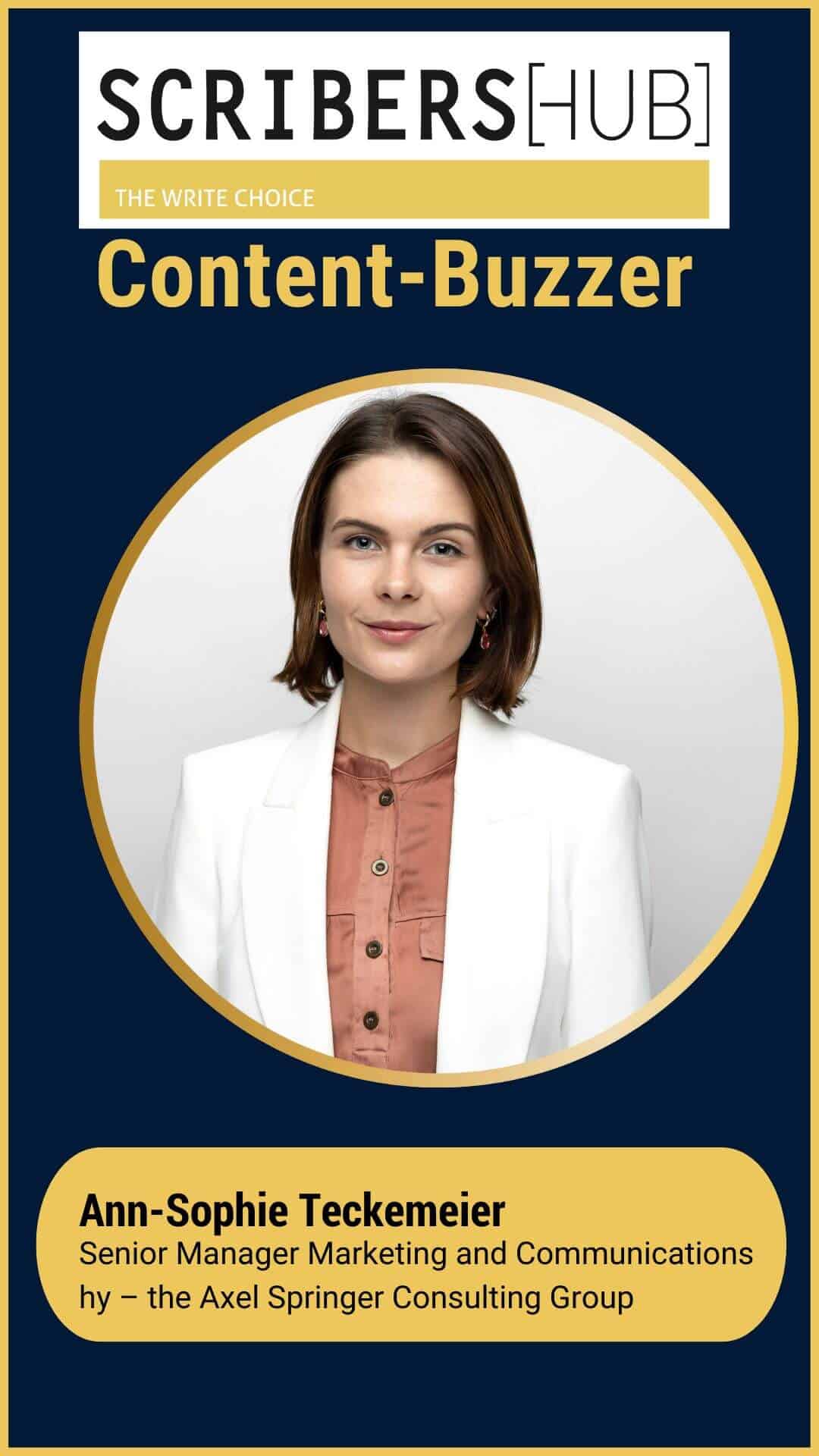
Ann-Sophie Teckemeier, Senior Manager Marketing & Communications hy
What does content mean for you?
For me, content is the perfect combination of creativity, precision, and relevance. Content reaches people on an equal footing and is both effective and memorable. The biggest challenge in the age of information overload is to continually create new content that offers genuine added value.
What was the worst content you met?
Pinky Gloves from "Shark Tank" – the perfect example of how to kill innovation by not knowing your target audience. Two menstrual gloves, designed by two menstrual gloves, thought they were solving a major problem. In reality, they completely missed the mark. What followed was a massive backlash because the product was not only unnecessary but also riddled with clichés. For me, it's a lesson: without a genuine understanding of the people you want to reach, no content or product will work.
How does good content succeed in times of chatt and Co.?
AI saves time and optimizes processes, but texts written by real people have a depth and personality that AI cannot replace. The challenge lies in using AI effectively without losing the art of creative writing.
Especially in times of generic AI content, it's more important than ever to stand out with authentic, personal stories. My three key takeaways:
● Don't just take over: ChatGPT provides ideas, but you do the fine-tuning. Proofread texts, read them aloud – if it sounds clunky, it needs revision.
● Preserve your own handwriting: Start with your own thoughts and use AI only as a support. Personality beats perfection.
● First impressions matter: The opening determines whether someone stays engaged. Surprising sentences spark interest. Images, GIFs and interactions should specifically support the content – not just be used, because "it's part of it".
Complete the sentence: Content is always...
… the translator between strategy and target audience.
.


